2026 Toyota Hiace : I’ve chased vans across continents, from dusty Middle Eastern highways to Tokyo’s tight streets, and nothing screams reliability like the Toyota Hiace.
Now, with whispers of a 2026 push into the American market, this global icon might just shake up U.S. fleets and families alike.
Buzz Around a U.S. Debut
Toyota’s Hiace has been the unsung hero of vans worldwide since the 1960s, hauling everything from cargo to crowds in over 100 countries.
In the USA, though, it’s stayed off-limits—thanks to the infamous “chicken tax,” a 25% tariff on light trucks from the 1960s that’s still biting foreign vans today.
That rule, meant to protect U.S. poultry (seriously), slams imports like the Hiace unless they’re made stateside or qualify for loopholes.
But change is brewing. Recent Japan reveals for the 2026 facelift hint at North American tweaks, like FMVSS safety compliance and EPA-certified engines already used in other Toyotas.
Grey-market imports have trickled in for years, modded for U.S. roads at $50,000-plus, but enthusiasts say an official entry could debut late 2026—perfect timing as fleets eye diesel alternatives amid rising EV mandates.
Sharper Looks for American Roads
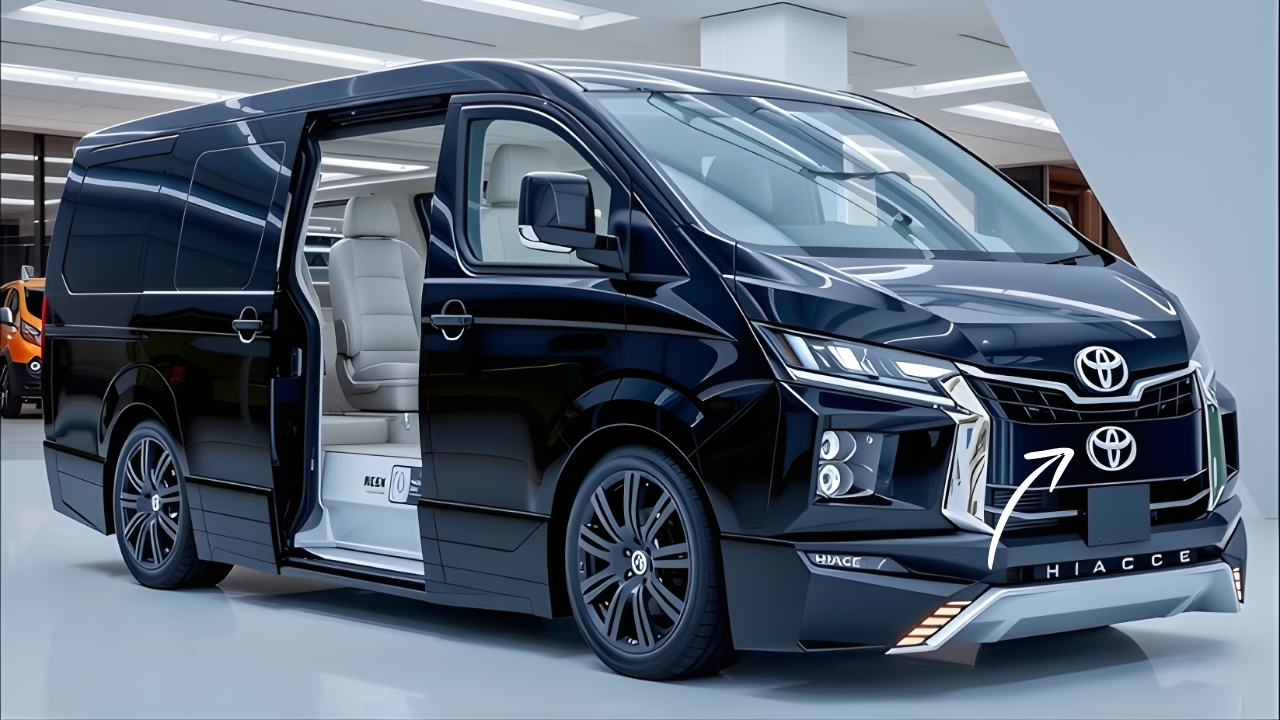
Gone is the boxy relic; the 2026 Hiace sports a bolder grille meshing with slim LED headlights that slice through fog like a knife.
Bi-LED projectors and reworked bumpers give it a muscular stance, while side profiles boast aerodynamic lines and power-sliding doors for easy access—crucial for loading gear in tight parking lots.
Alloy wheels get a fresh spin, and the rear flaunts vertical LEDs for better night visibility. Dimensions hold steady at about 213 inches long, 74 inches wide, and 90 inches tall, but subtle tweaks to the A-pillar boost driver sightlines.
It’s still a beast for U.S. highways, promising that Toyota toughness without the fuel-guzzling penalty.
Powertrains Tuned for Efficiency
Under the hood, Americans get choices that fit real-world needs. The 2.8L turbo-diesel churns 174 hp and 332 lb-ft of torque, mated to a 6-speed auto for smooth hauls—expect 25-30 mpg highway, stretching a 70L tank to 400+ miles. A 3.5L V6 petrol option pumps 277 hp for quicker merges, ideal if you’re towing trailers up to 3.5 tons.
Hybrid buzz is real too: a 2.5L setup blending gas and electric for 190 hp and 20% better efficiency, possibly nodding to California’s strict emissions.
Rear-wheel drive rules, with optional AWD for snow-prone states. No full EV yet stateside, but Europe’s Proace Electric hints at what’s coming.
Cabin Upgrades That Wow
Step inside, and it’s no longer a spartan hauler. An 8-12 inch touchscreen dominates, wired for wireless Apple CarPlay and Android Auto—stream Spotify on cross-country runs.
A 7-inch digital cluster shows speed, fuel, and nav at a glance, while top trims add heated/ventilated seats and a rear fold-out step for campers.
Seating flexes from 2 (cargo max) to 16 passengers, with modular benches folding flat for 300+ cu ft of space. Noise insulation quiets interstate drone, and USB ports everywhere keep devices alive. For businesses, add fleet telematics for tracking routes and maintenance.
Safety Suite Goes Next-Level
Toyota Safety Sense 3.0 is standard, packing pre-crash braking, lane tracing, adaptive cruise, and blind-spot alerts—vital for urban deliveries.
Japan-spec adds road sign assist and emergency steering, likely U.S.-bound to snag top crash ratings. Paired with robust airbags and stability control, it’s built to protect payloads and people.
USA Pricing and Getting One
Official MSRPs? Still under wraps, but base cargo models could hit $40,000-$45,000, passenger versions $55,000+, premiums for hybrids or VIP fits pushing $65,000.
Grey imports start higher due to mods, but factory U.S. spec might undercut Ford Transit or Mercedes Sprinter on ownership costs—Toyota’s resale is legendary.
Launch? Eyes on fall 2026, post-Japan rollout in February. Check toyota.com for updates, or hit dealers for pre-orders. Tariffs might bump prices, but incentives could offset.
Why It Fits American Needs Perfectly
In a market dominated by front-wheel-drive minivans like the Sienna, the Hiace’s RWD layout shines for towing and handling loads—think contractors, shuttles, or overlanders. Reliability?
Millions of miles proven globally, with parts aplenty via Toyota’s network. Fuel savings beat gas-only rivals, and that hybrid edge appeals to green fleets.
Customs love it too—camper conversions are exploding, turning it into rolling homes with slide-outs and solar. Against the Transit, it wins on longevity; vs. ProMaster, better refinement.
2026 Toyota Hiace : Game-Changer or Niche Player?
The 2026 Toyota Hiace isn’t just arriving—it’s poised to redefine U.S. vans with unkillable build, smart tech, and versatility that laughs at competition.
Also Read this – 2026 Ferrari Motorhome Unvealed change the Era, luxurious features make fabulous
If Toyota cracks the import code, fleets and adventurers win big. Keep watching; this could be the van America’s been missing.