Toyota HiAce 2026 : Toyota’s HiAce has long been a global workhorse, but buzz around its potential 2026 entry into the USA market has everyone talking.
Fans and fleet managers alike are wondering if this legendary van will finally conquer American roads.
The HiAce Legacy Goes Global
Picture this: a van that’s shuffled commuters in Tokyo, hauled cargo across Australia, and even served as a makeshift ambulance in remote corners of the world.
That’s the Toyota HiAce for you—a no-nonsense beast that’s sold over 20 million units since the 1960s without ever quite cracking the U.S. scene.
What makes it tick? Its ladder-frame chassis and mid-engine setup deliver unbeatable durability, shrugging off potholes and payloads that would sideline lesser vans.
Abroad, it’s the go-to for everything from urban deliveries to family road trips, proving Toyota knows how to build vehicles that last.
Now, with the 2026 refresh, whispers of a North American debut are turning heads. Toyota’s tweaking it just enough to flirt with U.S. regs, keeping that timeless boxy charm while slipping in modern edges.
Why America Said No—Until Maybe Now
Back in the ’80s, Toyota gave the HiAce’s predecessor a shot stateside, but minivan mania and picky safety rules killed it quick.
Fast-forward, and the infamous 25-year import rule means new ones are off-limits, leaving gray-market relics as the only option.
NHTSA crash standards clash with its cabover design, emissions hoops loom large, and the Chicken Tax tariffs don’t help. Yet Toyota’s been quietly aligning global models with U.S. specs—think upgraded side-impact protection and cleaner powertrains.
President Trump’s pro-manufacturing vibe since 2025 could grease the wheels, especially if they build it in San Antonio. Rumors swirl of fall 2026 dealer arrivals, timed perfectly for fleet budgets.
Fresh Face for 2026: Design That Works Hard
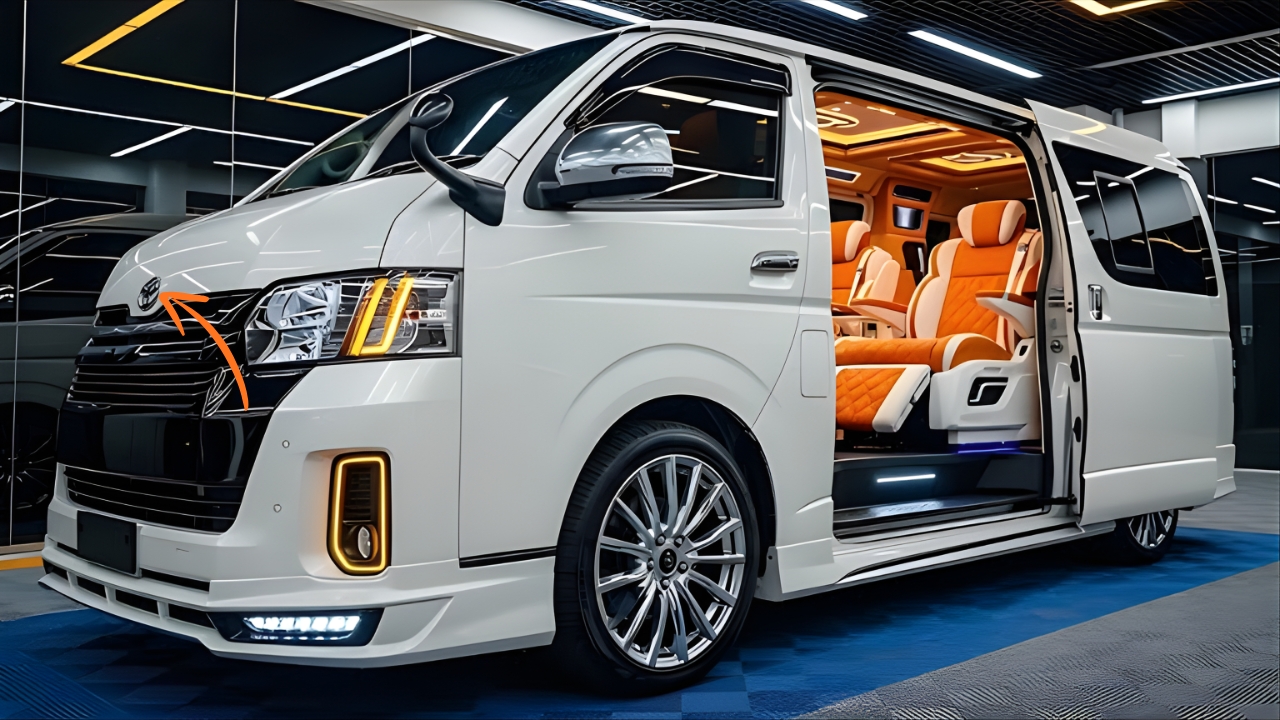
Don’t expect a radical overhaul—the 2026 HiAce sticks to its boxy roots, now with sleeker Bi-Beam LED headlights that cut through fog like a knife.
Aerodynamic tweaks shave wind resistance for better highway runs, and dual sliding doors make loading a breeze, even in tight spots.
Dimensions stay practical: around 20 feet long in super-long variants, with a tight turning circle that dances through city streets better than bulkier rivals.
Cargo configs offer up to 350 cubic feet of space, flat floors, and tie-downs galore—ideal for plumbers, delivery pros, or food trucks.
Passenger versions seat 12-16 with flip-forward rows and Isofix anchors, blending work rig toughness with family-friendly vibes. New colors like metallic blues pop beyond boring fleet white.
Power and Efficiency Tuned for U.S. Roads
Under the hood, expect U.S.-friendly tweaks to global favorites. The 2.8L turbo-diesel dishes 150-174 hp and 450 Nm torque, paired with a slick 6-speed auto for effortless hauls—highway sips around 20-22 mpg combined.
Gas heads might get a 3.5L V6 at 277 hp for grunt without diesel fuss, possibly with mild-hybrid help to nail CAFE standards. Towing hits 4,400-6,600 pounds, outpacing some V8 trucks while keeping costs low.
No full EV yet, but Toyota’s hybrid nod keeps it ahead of gas-guzzlers like the Ram ProMaster. Real-world tests abroad show it pushing 400 miles per tank, perfect for cross-state jobs.
Tech and Safety That Finally Fit America
Toyota Safety Sense 3.0 is the star—radar cruise with curve-speed control, lane change assist, and pre-collision braking that spots peds, bikes, even motorbikes.
Road sign assist reads limits, blind-spot cams project to mirrors, and 360 views park this beast like a sedan.
Inside, a 7-10 inch touchscreen runs wireless Apple CarPlay/Android Auto, heated seats in GL trims, and quieter cabins for long hauls. Power outlets, telematics for routes, and ergonomic seats turn it into a mobile office.
Seven airbags, ABS, and tire pressure monitoring round out a five-star safety rep that’s inching toward NHTSA approval. It’s not nanny-state overkill—just smart tools that save lives without fuss.
Facing Off Against U.S. Heavyweights
Stack it against the Ford Transit or Mercedes Sprinter, and HiAce wins on maneuverability and bulletproof reliability—often hitting 300,000 miles with basic care. Payloads top 3,000 pounds, undercutting pricier Germans on ownership costs.
Ram ProMaster? HiAce’s tighter circle and better resale edge it for urban fleets. At an estimated $38K-$48K base—leases under $600/month—it undercuts EVs upfront while trouncing V8 fuel thirst.
E-commerce boom favors its versatility; Amazon Flex drivers or contractors will love the low downtime. Toyota’s dealer net seals it for parts and service.
What It Means for American Buyers Toyota HiAce 2026
If it lands, expect cargo vans lined up at dealers, ready for shelving or liftgates. Fleets get TCO under $0.50/mile; adventurers mod it into campers with AWD rumors. Overlanders who’ve imported oldies will finally go factory-fresh with warranty.
Pricing wars loom with imports, but Toyota’s rep crushes doubts. Fuel savings amid diesel spikes make it a steal versus domestics plagued by rust. From last-mile hustles to family shuttles, the HiAce slots right into America’s grind.
Also Read this – 2026 Mazda CX-5 Reveiled Compact SUV with fabulous features, engine is powerful in 4X4
The 2026 Toyota HiAce isn’t chasing trends—it’s the reliable partner fleets and drivers have craved, now eyeing U.S. glory with tech-savvy grit.
If Toyota pulls the trigger, it’ll shake up vans, proving legends evolve but never quit. Keep watching; this could redefine hauling stateside.